
The Physical Reality of the Internet
People assume the internet is some ethereal cloud. It isn’t. The global internet is a highly fragile physical nervous system lying exposed on the bottom of the ocean. Roughly 99 percent of all transoceanic digital data – powering trillions of dollars in high-frequency trading, sensitive diplomatic cables, and civilian communications – flows through submarine fiber-optic cables. And right now, international law is completely failing to protect them.
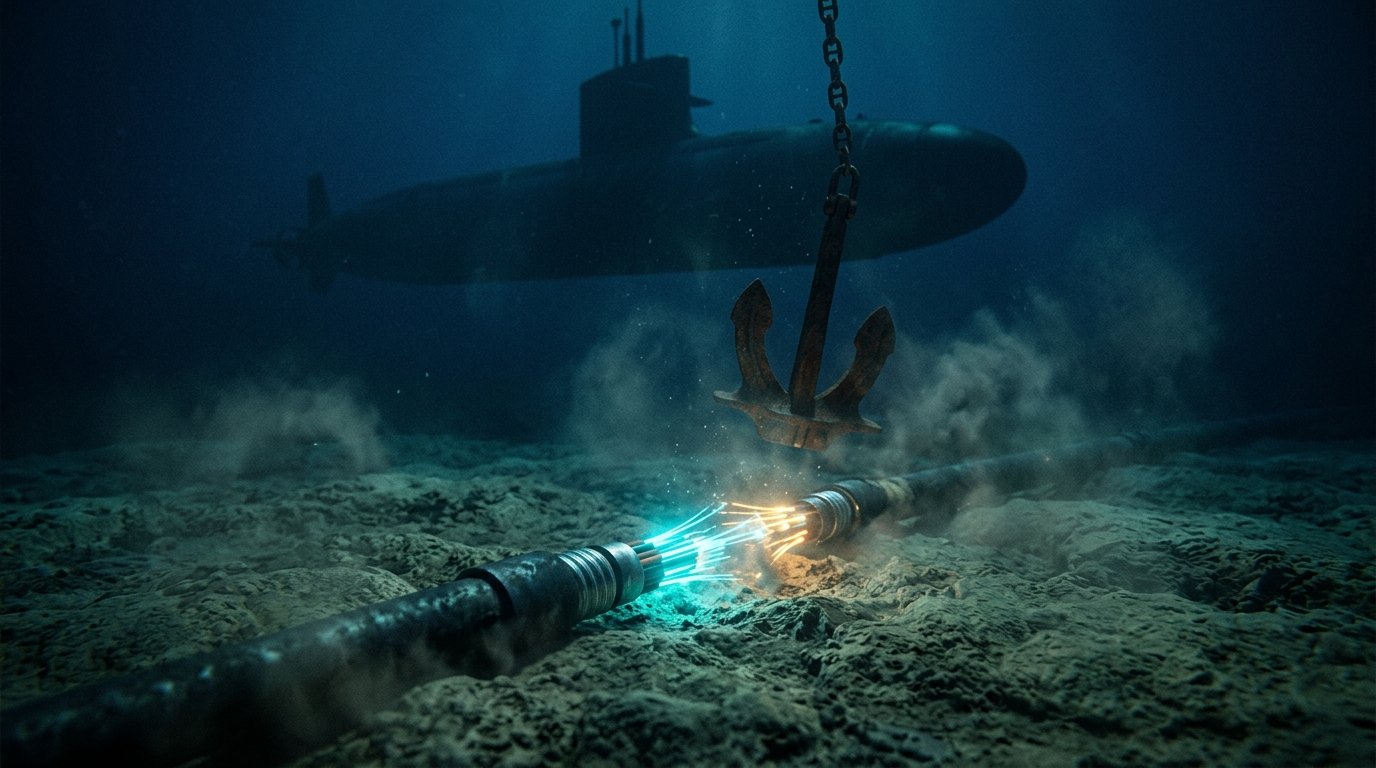
Recent geopolitical sabotage in the Baltic Sea and strategic anchor-dragging in the Red Sea have exposed a terrifying reality. State and non-state actors are actively targeting this infrastructure because it is the ultimate asymmetrical weapon. You don’t need to launch an airstrike on a financial capital if you can just hire a commercial trawler to drag its anchor across a critical data artery. The core problem? The foundational treaty governing the oceans treats these digital lifelines like they are 19th-century telegraph wires.
The UNCLOS Jurisdictional Trap
If you read the actual text of the United Nations Convention on the Law of the Sea (UNCLOS), the gaps are instantly obvious. Article 113 theoretically protects these cables by requiring states to pass domestic laws making intentional severance a punishable offense. But here is the massive jurisdictional catch. This enforcement only applies to ships flying a state’s own flag, or persons under its direct jurisdiction.
Imagine a scenario where a rogue nation hires a mercenary maritime militia, registers the ship under a convenient flag in a completely different jurisdiction, and “accidentally” drops an anchor on a major transatlantic cable in the high seas. Under UNCLOS, the legal framework basically just shrugs. No single nation possesses the unilateral jurisdiction to board that vessel, investigate the crew, or prosecute the saboteurs. UNCLOS was finalized in 1982. The drafters were worried about careless fishing nets snagging copper wires. They were absolutely not preparing for state-sponsored hybrid warfare designed to cripple the global digital economy. Consequently, the high seas remain a total legal black hole for infrastructure protection.
The Evidentiary Nightmare and Environmental Weaponization
We have already seen how this jurisdictional paralysis plays out in real time. Look at the sabotage of the Nord Stream gas pipelines in 2022. While that was energy infrastructure, the legal and evidentiary nightmare is identical for data cables. Identifying the perpetrator at the bottom of the sea is incredibly difficult. Proving state intent is nearly impossible. And even when nations conducted extensive underwater investigations within their Exclusive Economic Zones (EEZs), the fragmented nature of international maritime jurisdiction meant that the investigations ultimately stalled out.
When a data cable is cut, time is critical. Yet, if a repair ship needs to enter another state’s EEZ to fix the severed line, they often face massive bureaucratic delays. UNCLOS allows coastal states to heavily regulate marine research and environmental activities in their waters. Coastal states routinely weaponize environmental permitting to delay cable repairs for weeks, intentionally suffocating their geopolitical rivals’ data flow under the guise of ecological protection.
Look at Article 56 of UNCLOS. It grants coastal states sovereign rights to protect and preserve their marine environment. In peacetime, this makes perfect sense. In hybrid warfare, it is the ultimate geopolitical stalling tactic. A hostile state can legally block an international repair ship from fixing a severed cable by simply demanding a six-week environmental impact assessment. The legal text actively facilitates the economic disruption. They don’t need to fire a single shot. They just let the bureaucracy suffocate the data flow while the global financial markets panic.
The Privatization of Geopolitical Risk
Let’s add another massive legal complication. It isn’t just state governments laying these cables anymore. We are currently watching the total privatization of geopolitical risk. Over the last decade, tech monopolies like Google, Meta, and Microsoft have functionally taken over the subsea cable industry. They now own or finance the vast majority of new transoceanic routes. UNCLOS was designed in an era where state-owned telecommunication monopolies laid the wires. Today, we are expecting private tech executives to navigate international maritime law while their physical assets are caught in the crossfire of hybrid warfare.
When a proxy militia cuts a cable owned by a private American tech conglomerate in the high seas, who actually retaliates? Does the tech company hire private maritime security? Does the flag state of the repair ship intervene? The law provides absolutely zero clarity. Private corporations are currently functioning as the custodians of global internet security, but they possess zero legal authority to defend their own infrastructure under international law. This shifts the burden of deterrence entirely onto private capital. We are asking civilian engineers to operate in active naval conflict zones. If the international community refuses to clarify the rules of engagement for corporate infrastructure in the high seas, we will eventually see these tech monopolies demanding the right to arm their own repair vessels, creating a terrifying precedent for maritime law.
The Limits of Modern Cyber Law
So, if maritime law is broken, can modern cyber warfare laws step in? Not really. The Tallinn Manual 2.0, which governs the international law applicable to cyber operations, classifies data cables as critical national infrastructure. However, physically cutting a cable creates a bizarre legal gray area between kinetic warfare and cyber warfare.
Is severing a data cable an “armed attack” under Article 51 of the UN Charter? Almost certainly not, unless it directly results in massive human casualties. Malicious state actors understand this threshold perfectly. They intentionally operate in this exact gray zone. They can cause billions of dollars in economic damage and severe communication blackouts without ever crossing the legal red line that would trigger an armed international response. The Tallinn framework is intellectually fascinating for legal scholars, but it is practically useless when a proxy militia is dragging a trenching hook across the Mediterranean seabed.
The Universal Jurisdiction Solution
We cannot protect the 21st-century digital economy with a 1982 maritime treaty. Waiting for a formal amendment to UNCLOS is a diplomatic dead end. Getting 160-plus nations to agree on new jurisdictional powers in today’s polarized climate is a political fantasy.
Instead, the international community must bypass the UNCLOS amendment trap entirely. We need a highly targeted, plurilateral treaty specifically addressing subsea infrastructure. We should model this on the Convention on the Suppression of Unlawful Acts Against the Safety of Maritime Navigation (SUA). We need a legal instrument that explicitly criminalizes the deliberate severing of subsea data cables and, most importantly, establishes universal jurisdiction. If a vessel is heavily suspected of intentional cable sabotage in international waters, any warship from any signatory state must have the absolute right to board, inspect, and arrest the perpetrators.
Right now, the global economy is dangling by a thread. Literally. The international legal architecture designed to protect these cables is just as fragile as the glass fibers inside them. Until international law stops treating digital sabotage as a mere maritime accident, rogue actors will continue to weaponize the seabed with absolute impunity.